Most workshops evolve rather than get planned.
You start with a workbench and a few tools. Then come the power tools. The timber. The boxes of screws. The half-used materials. And, of course, that oddly shaped offcut you’ve been keeping for three years because you know it will be useful one day.
Before long, the workbench is doing double duty as a storage shelf and you know you own a 10 mm drill bit. You bought it. You used it last weekend. Where it is now is anybody’s guess.
A workshop doesn’t have to be spotless to work well. But if you spend the first 20 minutes of every project clearing a space to work, there’s room for improvement.
Here are five upgrades that can make building a whole lot easier.
1. Give everything somewhere to live
There’s workshop tidy, and then there’s actually being able to find things.
We’re interested in the second one.
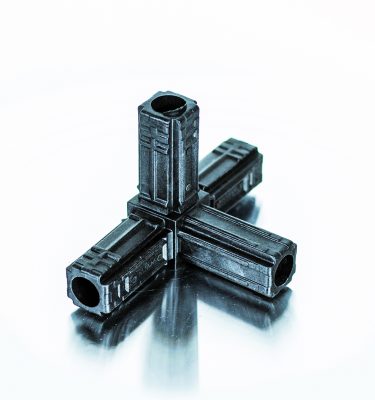
Start with the tools and materials you use most often. Keep hand tools close to your main work area. Put power tools together with their accessories. Give screws, bolts and Connect-it components dedicated storage. And find somewhere for longer lengths of material that doesn’t involve leaning them against the nearest wall until somebody bumps them.
Building your own shelving or cabinets means you can work with the space you actually have. Aluminium square tubing and Connect-it connectors allow you to determine the height, width and depth yourself.
That narrow gap next to the cupboard can become storage. Deeper shelves can take power tools. A lower shelf can hold heavier equipment.
You can even build around that awkward corner that has been collecting mysterious workshop objects since 2019.
The aim isn’t perfection. It’s knowing where the 10 mm drill bit is.
2. Build a workbench for the way you work
The workbench is supposed to be where the work happens.
In reality, it is often where the tape measure, three clamps, yesterday’s project, two coffee mugs and a box that needs to go back into the house happen to be.
Before you build or upgrade yours, pay attention to how you use it.
Is it too low? Too narrow? Does it wobble when you put some muscle into a job? Are you constantly moving tools out of the way because there’s nowhere else to put them?
Those frustrations are useful. They tell you what the next bench needs.
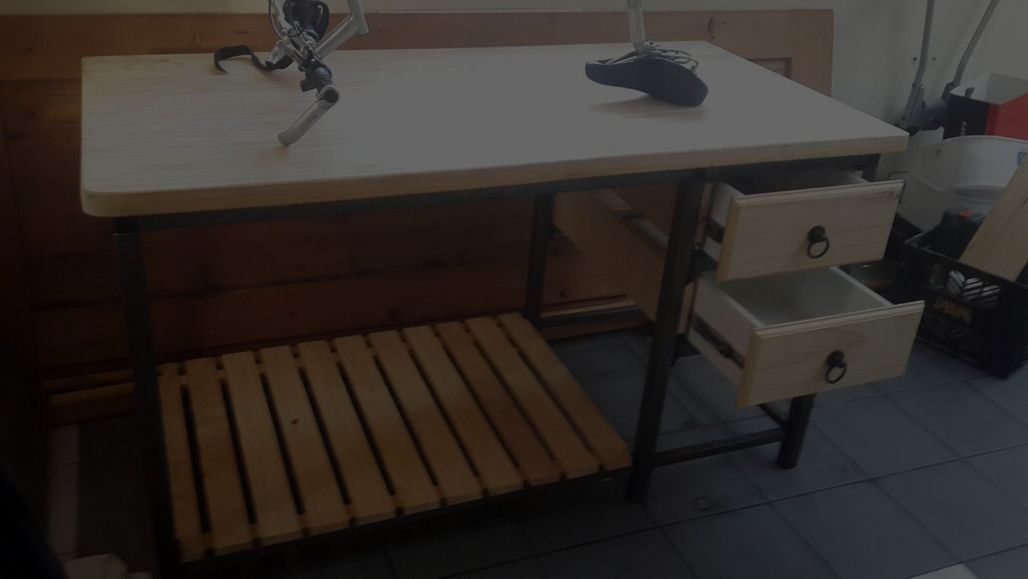
A frame made from aluminium square tubing and Connect-it connectors can be sized according to your space and working height. Add the worktop that suits what you build, then make use of the space underneath for tools, shelves or drawers. Just don’t automatically build the biggest bench you can squeeze into the room. You still need to be able to walk around it.
Preferably without turning sideways.
3. Look up
Floor space disappears quickly in a workshop.
One box becomes three. Timber starts leaning against the wall. The compressor needs somewhere to stand. Then someone puts something “there for now”, and six months later it has apparently acquired permanent residency.
So look up.
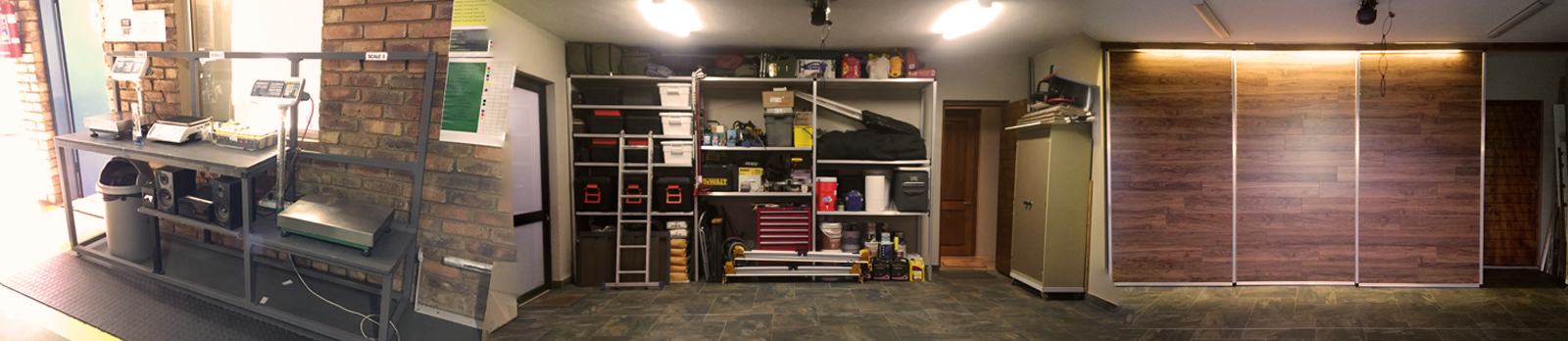
Walls and vertical space are often badly underused, particularly in garages and smaller workshops. Tall shelving lets you keep everyday tools and materials within easy reach while storing less frequently used items higher up. Wall-mounted storage can get tools off the bench. Even adding another level to an existing storage unit can free up useful floor space.
Just apply a little common sense when deciding what goes where. Heavy items belong lower down, and the thing you use every Saturday probably shouldn’t require a stepladder.
You may discover that your workshop isn’t actually too small. It just has too much stuff living on the floor.
4. Put wheels on it
There comes a point in many workshops when you realise you don’t need more space. You need the things occupying the space to move.
A mobile workbench can become an assembly table when you need it and park against the wall when you don’t. A tool stand can move to wherever you’re working. A storage trolley can follow the project instead of requiring 17 trips across the workshop because you forgot something again.
If you’re adding castors, think about what the unit will carry and choose accordingly. Lockable castors are particularly useful for benches and tool stands. Mobile is excellent, however mobile when you’re trying to drill something is less excellent.
For a smaller workshop, mobility can completely change how you use the available space.
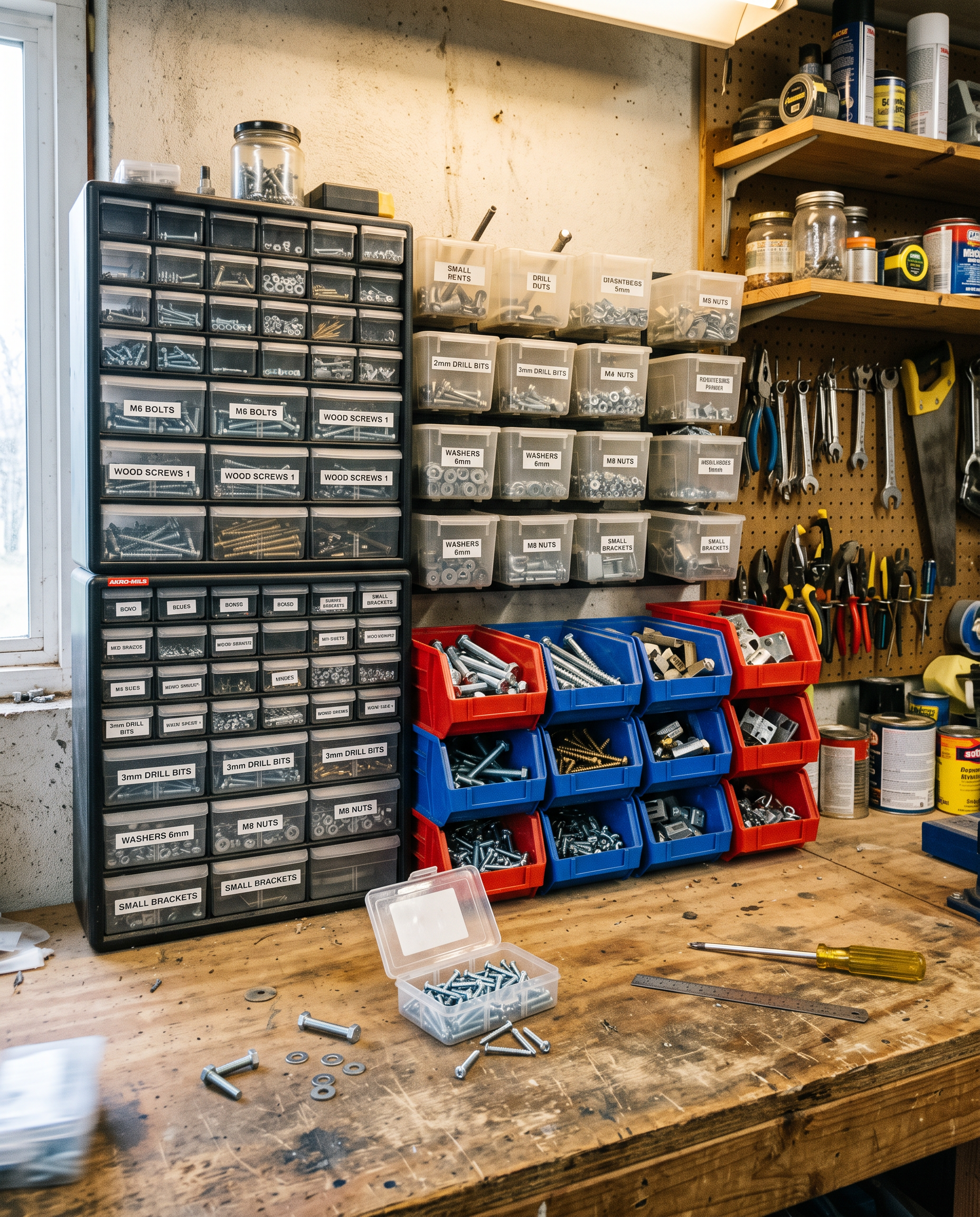
5. Declare war on the small stuff
Screws have a remarkable ability to multiply while simultaneously ensuring that you never have the exact one you need.
Then there are the washers, nuts, bolts, brackets, drill bits, connectors and miscellaneous little pieces that you’re keeping because they are definitely important, although you can no longer remember what they belong to.
Give them a proper home.
Small bins, drawers or transparent containers work well, particularly if you label sizes and group similar items together. Keep the things you use most often where you can reach them easily and reserve the less convenient spots for the occasional bits and pieces.
Don’t overcomplicate the system. If putting a screw away requires consulting an index, you’ve gone too far.
You simply want to be able to glance at your storage and know what you have, where it is and what needs replacing.
And yes, perhaps even find that 10 mm drill bit.
Start with the thing that annoys you most
You don’t need to spend an entire weekend reorganising the workshop.
In fact, that sounds suspiciously like work. Start with one irritation.
If you’re forever moving boxes before you can start a project, build storage. If your back starts complaining after an hour at the bench, rethink the bench. If you have to move three machines to use the fourth, put something on wheels.
One of the advantages of the Connect-it system is that whatever you build doesn’t have to stay exactly that way forever. Aluminium square tubing and connectors let you build practical frames without welding, and you can adapt or extend them as your workshop changes.
Because it will change.
There will be another tool.
There will be more offcuts.
And apparently, there will never be enough clamps.
But at least you’ll know where to put them.